You finally tossed your graduation cap, celebrated with your friends, and took those stunning campus photos. But once the confetti settles, a ticking time bomb starts in the background: your immigration status. Navigating the F1 Visa Grace Period Rules right after college can feel like walking through a minefield, especially when you are desperately waiting for your Optional Practical Training (OPT) approval and haven’t secured a job yet. The anxiety of seeing immigration enforcement (ICE) knocking on your door is completely valid and terrifying.
Many international students mistakenly assume that holding a valid visa stamp in their passport means they are safe to stay. This is a massive rookie mistake. Your legal stay in the United States is entirely tied to your I-20 and your active student status, not the expiration date printed on your visa card. Once your academic program officially ends, the system automatically triggers a countdown. If you miss the deadlines, you become an undocumented immigrant overnight.
Before you panic and start researching trial lawyers institute elite secrets for a dramatic courtroom showdown, take a deep breath. There are perfectly legal ways to navigate this bureaucratic nightmare. Let’s break down the exact timelines, the hidden legal loopholes, and the ultimate game plan to keep your American dream alive without breaking any federal laws!
Understanding the Core F1 Visa Grace Period Rules and Timelines

Ignorance is never an excuse in the eyes of the United States Citizenship and Immigration Services (USCIS). To protect your future, you need to understand exactly how the system calculates your days. The F1 Visa Grace Period Rules are heavily strictly enforced, and automated systems will flag your SEVIS record the moment you step out of line. Here is what you need to master.
1. The Famous 60 day grace period international student Explained
The moment your program end date arrives (as listed on your I-20, not necessarily your graduation ceremony date), you enter a very specific safety net. The 60 day grace period international student rule allows you to legally remain in the US for two months to pack up your belongings, travel domestically, or prepare for your departure.
- During this window, you are absolutely not allowed to work or earn any income.
- If you leave the US during this timeframe, your grace period instantly ends, and you cannot re-enter with your current F1 visa.
- This is the exact timeframe you must use to apply for OPT, transfer schools, or change your visa status.
2. Navigating the F1 opt unemployment limit
If you successfully apply for OPT, a new clock starts ticking the moment your EAD (Employment Authorization Document) card becomes active. You do not have infinite time to land a job. The F1 opt unemployment limit strictly caps your jobless days at 90 days total for the entire 12-month OPT period.
- These 90 days include weekends, holidays, and time spent outside the United States.
- Working less than 20 hours a week or doing an unpaid internship (in your major field) legally stops this unemployment clock.
- Exceeding this 90-day limit means your OPT is automatically invalidated, and you must leave the country immediately without a grace period.
3. Beware of overstaying student visa consequences
Do not test the government by staying “just one more week” to attend a friend’s wedding or finish a road trip. The overstaying student visa consequences are brutal and unforgiving in 2026.
- Overstaying automatically voids your current visa stamp, meaning you can never use it again.
- Accruing more than 180 days of unlawful presence results in a strict 3-year ban from re-entering the US.
- Accruing one full year of unlawful presence will trigger a devastating 10-year ban, effectively ruining your future prospects of working or traveling to America.
Smart Legal Loopholes to Extend Your Legal Stay
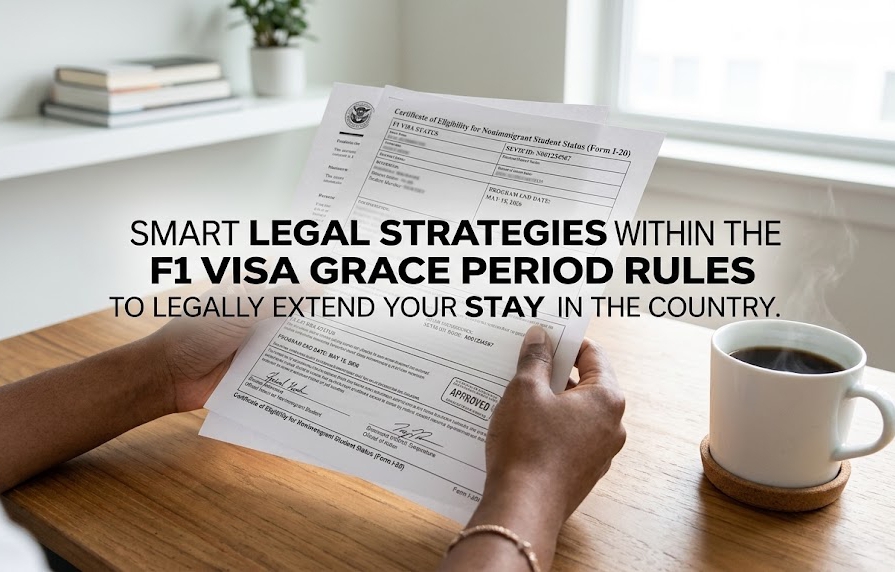
If you are struggling to find an employer willing to sponsor you, and you are worrying about the F1 opt unemployment limit clock ticking down, it is time to pivot. You are desperate to avoid the overstaying student visa consequences that could ruin your record, so you must explore alternative legal pathways. Here are three incredibly effective strategies to buy yourself more time.
1. Buying Time by transferring sevis record
One of the safest ways to maintain your legal status is to seamlessly move to another educational institution. By transferring sevis record to a new school before your grace period expires, you reset your F1 status entirely.
- You must receive an acceptance letter from a SEVP-certified school before your 60 days run out.
- The start date of your new program must be within 5 months of your previous program’s end date or OPT end date.
- This strategy is perfect if you decide to pursue a Master’s degree or a specialized certification program to boost your resume while the job market recovers.
2. Is applying for tourist visa after f1 a Good Idea?
If you simply need a few extra months to wrap up your apartment lease, sell your car, or do some final sightseeing, changing your status might be the answer. But is applying for tourist visa after f1 actually viable? Yes, but it requires careful execution.
- You must file Form I-539 to change your status to a B2 (Tourist) visa before your current grace period expires.
- You must prove to USCIS that your intent is strictly for temporary tourism, not for secretly hunting for jobs or working under the table.
- While your I-539 application is pending, you are allowed to stay in the US legally, but you cannot work under any circumstances.
3. Securing Day 1 CPT Programs
If you still want to work and gain US experience but missed your OPT window, enrolling in a Day 1 CPT (Curricular Practical Training) program is a popular, albeit highly scrutinized, loophole.
- These are legitimate Master’s or Doctorate programs that require you to work in your field from the very first day of classes.
- You must ensure the university is fully accredited and strictly follows USCIS regulations to avoid future H1B visa denials.
- This option allows you to earn an income and stay perfectly legal while continuing your education.
Immediate Action Plan If Your Time is Running Out

When the calendar is no longer your friend, swift action is your only defense. You must maximize your 60 day grace period international student window before the system flags you as an overstay. Do not wait until day 59 to figure out your life; the immigration system is painfully slow, and digital applications can glitch at the worst possible moments.
To ensure you stay safe and compliant, follow this strict checklist immediately:
- Contact your DSO (Designated School Official): Your DSO is your best friend. Tell them your situation immediately so they can update your SEVIS portal. Do not make any major moves without their blessing.
- Prepare your transfer documents: If you plan on continuing your studies, start the process of transferring sevis record to a new institution at least three weeks before your deadline.
- Seek legal counsel: Seriously consult a certified immigration lawyer if you are considering applying for tourist visa after f1 to stay legally. A minor error on Form I-539 can lead to a direct denial and deportation proceedings.
- Stop working immediately: If your OPT expires or your program ends, you must cease all employment, including freelance gigs or cash jobs. Unauthorized work is the fastest way to get deported and banned.
Q&A
What happens if I find an employer who wants to hire me on day 61 of my grace period?
Unfortunately, you are out of luck for OPT. You cannot apply for OPT once your 60-day grace period has expired. Even if a major tech company wants to hire you with a massive salary, you cannot legally work for them under your F1 status. Your only option at that point is to leave the country and have the company sponsor you for a different visa, such as an H1B or an O1 visa, through consular processing in your home country.
Will I get arrested at the airport if I leave the US a few days after my grace period ends?
You will likely not be arrested on your way out, as the US government generally prefers that individuals self-deport. However, violating the F1 Visa Grace Period Rules will severely impact your record. The immigration officer will see that you overstayed in the system. While a few days might not trigger a formal 3-year ban, it will make it extremely difficult to ever get another US visa (like a tourist or work visa) approved in the future, as you will be flagged as someone who disrespects immigration timelines.
What if I leave the US for a quick vacation to Mexico or Canada during my grace period? Can I come back to pack my bags?
Absolutely not. The moment you cross the border and leave the United States during your 60-day grace period, your current F1 status immediately terminates. You cannot use your F1 visa to re-enter the country, even if you left an apartment full of belongings or need to attend a delayed graduation ceremony. Leaving the country legally forfeits the remainder of your grace period, meaning you would need to apply for an entirely new visa (like a B2 Tourist visa) from scratch just to enter the US again.