Seeing those flashing red and blue lights in your rearview mirror is a sinking feeling we all dread. The moment the officer hands you that slip of paper, your mind immediately jumps to the hefty fines, the skyrocketing insurance premiums, and the points hitting your driving record. But here is a crucial truth that most drivers simply do not realize: signing that citation is not an admission of guilt, and you absolutely have the legal right to Fight Speeding Ticket charges in a court of law.
Many people simply mail in their checks because they are intimidated by the judicial system or have no idea what to say when standing in front of a judge. They assume the officer’s word is absolute law. However, officers make mistakes, equipment malfunctions, and environmental conditions can severely impair visual judgment. If you walk into that courtroom fully prepared, polite, and armed with the right legal terminology, your chances of getting the case dismissed or drastically reduced skyrocket.
In this comprehensive guide, we are not just giving you vague legal advice. We are handing you the exact, word-by-word scripts used by defense attorneys so you know precisely what to say from the moment you step up to the podium. Whether you are challenging faulty equipment or relying on GPS data, we have you covered. And if you are dealing with other complex legal matters, like property disputes, you might also find our guide on real estate lawyers tips highly useful. Let’s get your driving record cleared!
Step 1: The Initial Plea and Opening Statement Fight Speeding Ticket
The very first step in the process happens weeks before your trial date. When you look at the back of your citation, you will see instructions on how to submit your plea. To initiate your defense, you must officially plead not guilty traffic ticket through the mail, online portal, or during your initial arraignment.
Once your trial date is set and you are standing in front of the judge, confidence and extreme politeness are your best weapons. You need to establish immediately that you take the proceedings seriously.
The Word-by-Word Opening Script
When the judge calls your name or case number, step up to the podium and use this exact speeding ticket defense script:
- “Good morning, Your Honor. My name is [Your Full Name], and I am appearing pro-se [representing yourself] regarding citation number [Insert Number].”
- “I am here today to respectfully plead not guilty to the charge of exceeding the posted speed limit.”
- “On [Date] at approximately [Time], I was traveling [Direction] on [Street Name]. I was maintaining a safe speed that was fully consistent with the flow of surrounding traffic and the driving conditions at that time.”
By using this calm, professional opening, you immediately separate yourself from angry drivers who just want to argue. You establish a factual baseline for your defense.
Step 2: How to Challenge Police Radar Accuracy
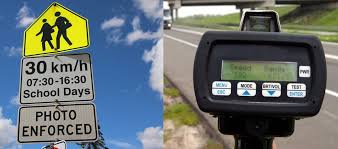
If the officer claims they caught you using a laser or radar gun, this is actually an excellent opportunity for your defense. Many drivers assume these machines are flawless, but they are highly sensitive pieces of electronic equipment that require constant, meticulous maintenance.
Questioning police radar accuracy is one of the most effective ways to introduce “reasonable doubt” into your case. If the officer cannot prove the machine was working perfectly, the reading cannot be trusted.
Script for Questioning the Calibration
When it is your turn to cross-examine the citing officer (or address the judge if the officer’s report is the only evidence), use these specific questions:
- “Your Honor, I respectfully request that the officer provide the exact date and time the radar/lidar unit used to cite me was last calibrated.”
- “Can the officer produce the written, official maintenance logs and tuning-fork calibration records for this specific device today in court?”
- “If the official calibration logs cannot be produced, I argue that a significant reasonable doubt exists regarding the police radar accuracy, and this reading should be deemed inadmissible.”
Understanding the Technical Flaws
You do not need to be a scientist to point out common radar errors.
- The Shadowing Effect: Radars can easily lock onto a larger vehicle (like a semi-truck) in the lane next to you, giving the officer the speed of the truck instead of your smaller car.
- Radio Interference: Police radios, CB radios, and even high-tension power lines can cause false speed readings. If you were pulled over near heavy infrastructure, mention it to the judge as a potential source of interference.
Step 3: Challenging Visual Observations and Signage
Sometimes, officers do not use radar at all; they use a technique called “pacing” (following you to gauge your speed) or simply visual estimation. Human error is incredibly common in these scenarios.
To successfully beat a traffic ticket, you must point out how environmental factors or poorly maintained infrastructure made it impossible for either you to know the speed limit, or for the officer to accurately identify your car.
Script for Obscured Speed Limit Signs
If the speed limit sign was hidden, you cannot be expected to follow it.
- “Your Honor, I was unaware of the drop in the speed limit because the sign located at [Specific Location] was completely obscured by overgrown tree branches [or damaged/faded].”
- “I have brought time-stamped photographs taken on the day of the citation clearly showing the sign is completely illegible from the roadway.”
- “Because the signage was inadequate, I could not reasonably know the posted limit, and I ask the court to dismiss the violation.”
Script for Mistaken Identity or Weather
If you were pulled over in heavy traffic or terrible weather, the officer might have grabbed the wrong car.
- “Your Honor, at the time of the citation, the traffic on [Road Name] was extremely heavy, and visibility was severely compromised due to [Heavy Rain/Fog/Darkness].”
- “There were several vehicles of the same color and size traveling in a tight pack. Given the poor visibility, it is highly probable the officer mistakenly identified my vehicle as the one speeding.”
Step 4: Using GPS Data and The “Necessity” Defense
In the modern age, your smartphone or dashcam is your best witness. If you use tracking apps, you might have hard proof of your exact speed. Alternatively, if you were speeding due to a true, life-or-death emergency, the court needs to hear it.
Here is how to deploy these advanced tactics in your final push to beat a traffic ticket.
Presenting Your GPS Evidence
If you have data, introduce it formally:
- “Your Honor, I have brought an exported data log from my vehicle’s GPS tracking application [or Dashcam].”
- “This log clearly demonstrates that at the exact timestamp of the citation, my vehicle was traveling at [Your Speed] mph, well within the legal limit.”
The “Necessity” Defense Script
Warning: Do not use this if you were just late for work. This is strictly for medical emergencies.
- “Your Honor, while I acknowledge exceeding the limit, I was rushing a passenger to the hospital due to an immediate medical emergency [Provide Evidence/Hospital Bill].”
- “Under the doctrine of necessity, I genuinely believed the risk of harm from the medical emergency was far greater than any harm caused by my temporary increase in speed.”
Taking the time to Fight Speeding Ticket charges is almost always worth the effort. By appearing in court, remaining strictly professional, and using a prepared speeding ticket defense script, you show the judge you are not just making excuses, but presenting a valid legal argument. Remember to formally plead not guilty traffic ticket well before your deadline, gather your photographic or GPS evidence, and practice your lines. Even if the ticket isn’t entirely dismissed, courts will often reduce the fines or waive the points just for presenting a solid, respectful defense!
Q&A
Do I absolutely need to hire a lawyer to plead not guilty traffic ticket in court?
No, you do not. The vast majority of traffic courts are designed for citizens to represent themselves (appearing pro-se). While hiring a traffic attorney can be highly beneficial especially if you are facing severe penalties, points that could suspend your license, or a reckless driving charge you can successfully challenge basic infractions on your own by preparing a solid defense script and gathering factual evidence like photos or dashcam footage.
What actually happens if the police officer does not show up to my court date?
This is the best-case scenario for any driver. In the United States judicial system, you have the constitutional right to face your accuser. If the citing officer fails to appear in court on the day of your trial to testify against you, you (or your attorney) should immediately stand up and respectfully request that the judge dismiss the case entirely due to a lack of prosecution. Judges will typically grant this dismissal instantly.
Can I use the argument that “everyone else was speeding too” to Fight Speeding Ticket charges?
Absolutely not. This is one of the most common and ineffective defenses you can possibly use. In the eyes of the law, the fact that other drivers were also breaking the law does not legally excuse you from breaking it. Telling the judge “I was just keeping up with the flow of traffic” is essentially a direct admission of guilt. You are much better off questioning the calibration of the radar or presenting evidence of an obscured speed limit sign.